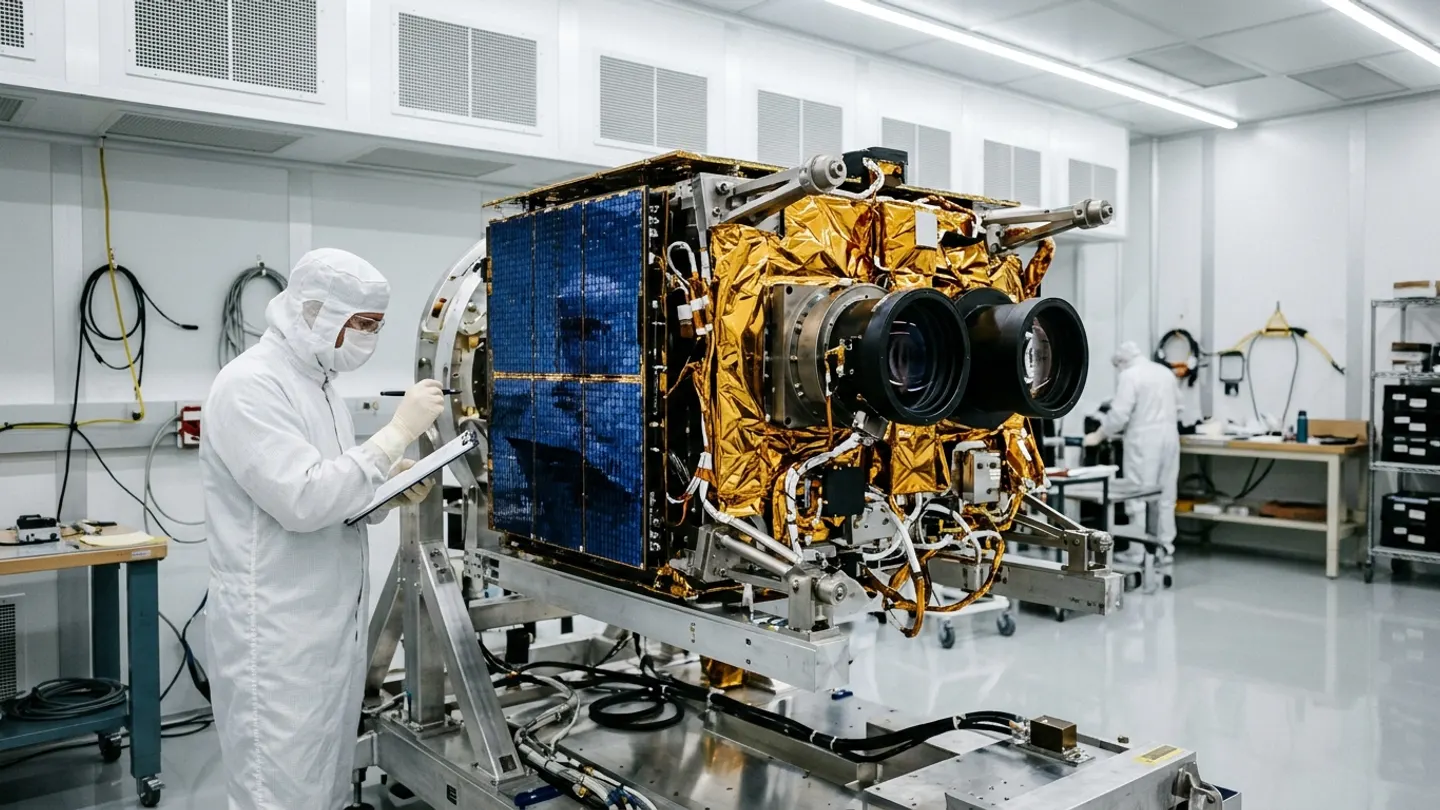
Commercial spacecraft in the 520-to-600-kilometer altitude band executed more than 54,000 automated collision-avoidance thrusters burns over the past six months, according to consolidated telemetry filings submitted to international spectrum regulators. Beginning next quarter, launch licensing authorities and specialty aviation underwriters will attach hard balance-sheet prices to every vehicle left drifting after end-of-life.
For over a decade, low-Earth orbit operated as an unpriced commons: whoever cleared spectrum paperwork first could populate an inclination shell with thousands of relay nodes while carrying zero liability for propellant exhaustion.
Escrow bonds tied to post-mission disposal
Under coordinated licensing rules adopted across major launch jurisdictions, fleet operators must post performance bonds—scaled at $125,000 per hundred kilograms of dry mass—released only when a satellite completes controlled atmospheric reentry within twenty-four months of retirement, down from the legacy twenty-five-year guideline.
Underwriters in London, Zurich, and Singapore have simultaneously introduced tiered hull premiums rewarding spacecraft equipped with dual-redundant electric thrusters and optical tracking beacons.
Why terrestrial cables remain irreplaceable
Telecom analysts note that stricter orbital liability narrows the cost gap for rural backhaul while underscoring why transoceanic fiber ships—profiled at sea in Aboard the repair vessel guarding Europe’s northernmost fiber crossings—and cross-border treasury clearing networks in Wholesale rate-cut caution meets the quiet rollout of instant cross-border clearing continue to rely on physically armored seabed routes for core traffic.